

Commentary
Pierre Vimont
{
  "authors": [
    "Pierre Vimont"
  ],
  "type": "commentary",
  "blog": "Strategic Europe",
  "centerAffiliationAll": "",
  "centers": [
    "Carnegie Endowment for International Peace",
    "Carnegie Europe"
  ],
  "englishNewsletterAll": "",
  "nonEnglishNewsletterAll": "",
  "primaryCenter": "Carnegie Europe",
  "programAffiliation": "",
  "regions": [
    "Europe"
  ],
  "topics": [
    "EU",
    "Foreign Policy",
    "Security",
    "Defense",
    "Economy"
  ]
}
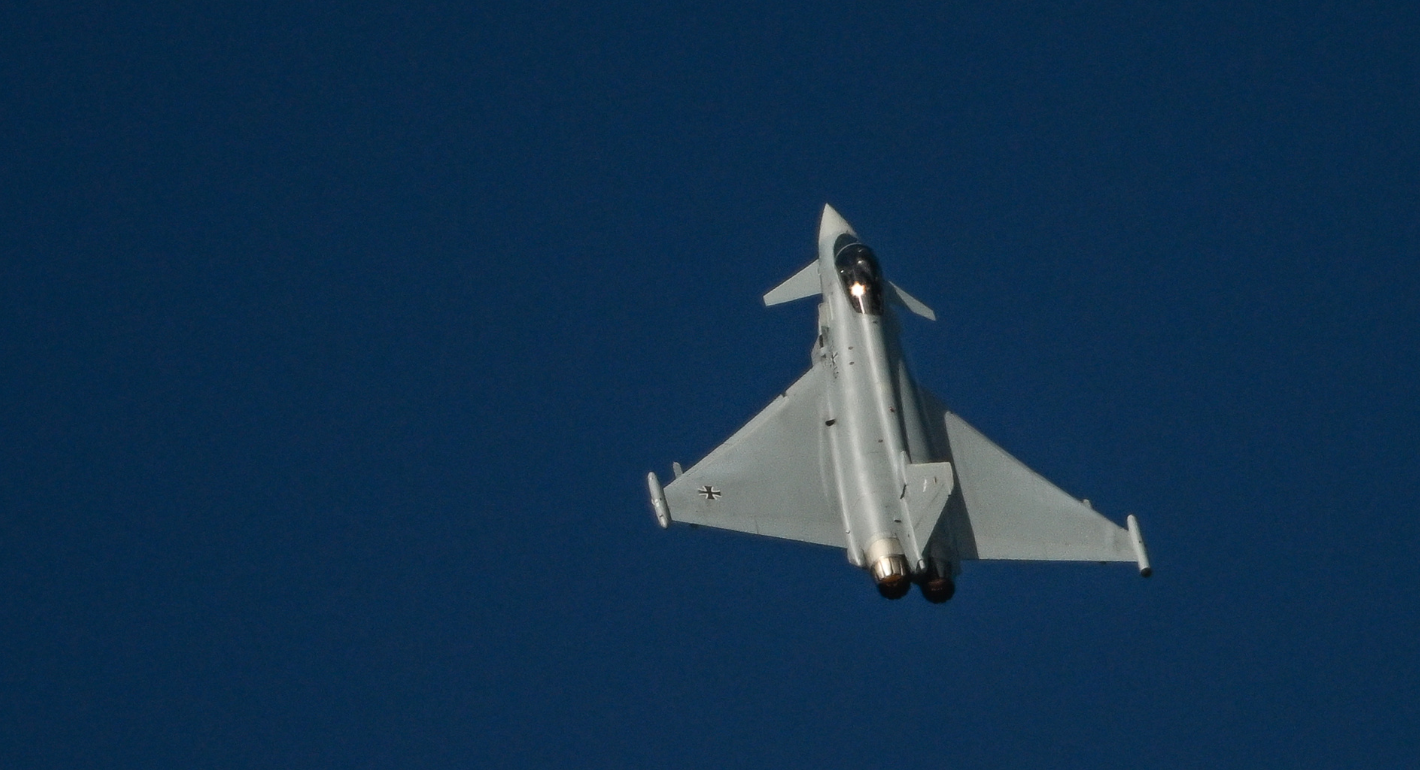
Source: Getty
The EU is putting together a new security strategy to meet today’s myriad challenges. But for any proposal to be effective, the union needs to grapple with its identity and ambitions.
The European Commission’s recent decision to draft a new European Security Strategy has come as a surprise to many. And the desire to deliver it on a very tight timeline, in time for Commission President Ursula von der Leyen’s State of the European Union address in September, a mere four years after the EU’s Strategic Compass, is perplexing to some.
But the union’s strategic environment has experienced epochal shifts: Russia’s grinding war in Ukraine, China’s accelerated economic dominance and existential threat to many European industries, as well as the United States’ transformation from most trusted ally to unreliable and sometimes coercive partner. Europe is therefore confronted with a new world order where hard power has become the name of the game. As a consequence, security concerns permeate all policies far beyond the military sector. They shape ongoing debates about economic overdependence—from energy to digital applications or critical minerals—with the risk of being instrumentalized for political purposes.
Today, Europe cuts a hesitant figure on the international scene. It could become a lonely one if it fails to clarify what it represents, where it wants to go, and which partners it intends to work with. This is where the new security strategy can make a difference. In the end, this process should be about redefining the European identity as it confronts a massive set of issues rarely seen in its history.
From that point of view, Europe could go for an inward looking approach or, conversely, choose to lead an alliance of like-minded countries dedicated to the reform of the multilateral order. Equally, it could simply focus on managing the present crises as best as it can or raise its game to a vision of what it wants to be in the long term. In that case, it must be capable of offering its own perspective for a future security order for the continent as a whole and take responsibility for leading the way with outside partners dedicated to the revival of an improved rules-based order.
Yet, instead of engaging at this level, many member states fear that the commission may be using the new strategy to overstretch its sphere of action. Recent initiatives from Brussels, like encouraging joint procurements and more cooperation between defense industries, have raised concerns of a renewed attempt to redraw lines or responsibility in a sensitive political playground. The same concern applies to finances: With the ongoing discussions over multi-year budgetary planning, a new security strategy looks like the natural springboard to push for new external programs. As laborious negotiations try to balance member states’ top priorities—agriculture and social spending—with finding new money for competitiveness, the future security strategy looks like an unwelcome intruder in an already strenuous power play.
There is also the question of how the new strategy would propose to deal with the current state of relations with the United States. Can the EU draw any definitive conclusion from the giant shifts still underway in the transatlantic relationship? Redesigning this partnership may rapidly become an impossible task, when most member states fear antagonizing U.S. President Donald Trump and would rather buy time in the hopes of returning to a more orderly state of play.
All that said, as a constant defender of right over might since its inception, it is logical for the union to feel the urge to set up a more positive vision for the global order.
But the contents of a new security strategy would be far from consensus-based. Traditionally, strategies connect ends, means, and ways. In assessing its ambitions and priorities, Europe will have to analyze the increased complexity of contemporary threats. It must also define its own interests and unpack new instruments and working methods. In the past, EU strategies often resorted to a superficial analysis of the geopolitical environment, for fear of naming adversaries and describing the real nature of the threats Europe was confronting.
Today, it boils down to a larger question about the role of Europe in these consequential times.
The current threats are well known, and the goals—albeit of an unprecedented magnitude—are already largely mapped. In geostrategic terms, they include: reinforcing European defense against Russia, leading an uneasy transition with America as it moves from indispensable ally to unpredictable partner, and standing up to the rising economic, political, and military power of China. In soft power terms, they include managing the first new wave of enlargement since 2013 and reshaping relations with partners from the Global South, for whom Europe is the natural flag-bearer of a revised multilateralism. To this already overwhelming list could be added the more societal challenges, from AI to climate change and from migration to democracy.
On all these challenges, a credible and ambitious vision is expected by a large number of Europe’s partners. Currently lagging in responding to these expectations, Brussels is running the risk of being gradually sidelined. Indeed, it has been conspicuously absent from the tentative negotiations over Ukraine or the current crisis in the Middle East. Hopes of a crucial diplomatic role for Europe have all too often ended in delusion.
These are times to think creatively and promote a narrative that convinces both European populations and outside partners that the EU is profoundly changing. The priority must be to issue a clear political statement about what Europe intends to do at a time when many of its partners have lost confidence in its political agency. This new strategy must be about rebuilding trust in leadership: among the EU’s own members, among candidate countries in the Balkans and Eastern Europe, and among all potential partners who seek to build enhanced links with the union. If this future strategy can achieve that goal, it will have provided a meaningful way of reshaping Europe into a more compelling international actor and it will have rekindled true leadership.
Subscribe to Strategic Europe, delivered to you weekdays!

Senior Fellow, Carnegie Europe
Pierre Vimont is a senior fellow at Carnegie Europe. His research focuses on the European Neighborhood Policy, transatlantic relations, and French foreign policy.
Recent Work
Pierre Vimont
Pierre Vimont
The EU’s new migration policy is not suited to today’s realities. With climate change increasingly becoming a driver of displacement, Europe needs to rethink its deterrence-focused approach.

Shana Tabak
The battle over free speech has taken center stage since U.S. Vice President JD Vance accused Europe of censorship. From travel bans to social media regulation, especially around the Israel-Palestine conflict, are liberal democratic governments weaponizing free speech?

Rym Momtaz, ed.
Europe seems to have accepted its sidelining in the Middle East. The EU must reassert its support for the international rules-based order and step up engagement.
Rym Momtaz
Amid uncertainty caused by the Iran war, the global drive for nonproliferation has stalled. With Europe diplomatically marginalized and countries reassessing their nuclear options, efforts to curb the spread of nuclear weapons risk becoming irrelevant.

Jane Darby Menton
Preparing candidate countries for EU membership is no longer enough. As the enlargement process becomes a reality, the union must also prepare its own societies.

Iliriana Gjoni